

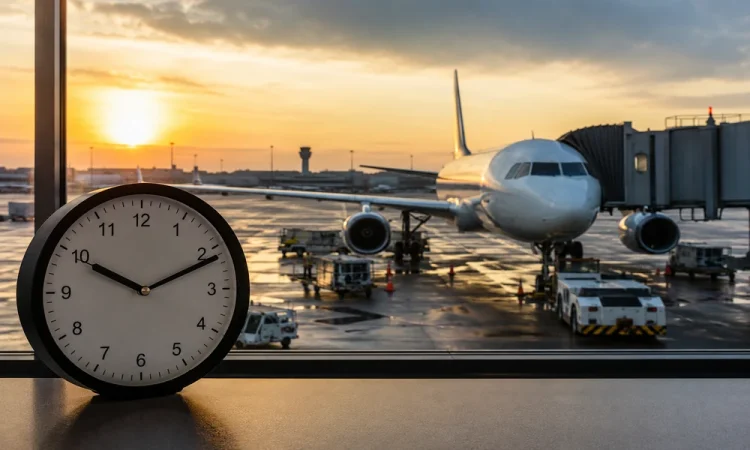
Commercial jet won’t fit in the sky. Just a broken bit of equipment can leave an aircraft parked on the tarmac, but that also sends ripples through the entire aviation ecosystem. This is the only phrase in the airline sector that feels even slightly extremely urgent. It is a call to action that demands the prompt attention of maintenance crews and logistics experts around the globe.
An unserviceable, or AOG aircraft is a big money pit. The airline operating a plane that sits somewhere instead of flying loses the equivalent of thousands of dollars in ticket sales, airport fees, and passenger compensation EVERY hour. Fixing this crisis will require speed, precision, and a super-specialized supply chain. A glimpse behind the scenes at how the industry races against time.
How One Broken Part Creates a Domino Effect?
In other words, when a pilot or mechanic uncovers a major issue before departure, the aircraft status is immediately flagged. Until the proper replacement part is installed and inspected by certified technicians, it can no longer fly safely.
The trouble spreads fast. One leg of one flight missed means hundreds lose their connecting flights. Crews rack up layovers in the wrong cities and downstream schedules go kaput. AOG aircraft result in a premium logistics protocol, circumventing all standard shipping channels due to how serious the stakes are.
Anatomy of an Emergency Response
Repairing a grounded airplane is not merely as question of knowing what needs to be done, but rather it has become a competitive sport in its own right. Once the status is announced, an astute control tower swings into action finding and delivering a solution.
Searching for the Needle in a Hay Stack
Logistics teams immediately query worldwide databases for an in-stock part nearest to them. Maybe it´s parked in a warehouse thousands of miles away or inside someone else private inventory. During these emergencies, competitors frequently rack up a shared parts stash to keep the international collection going.
The Fastest Route Possible
Forget about standard shipping. They use hot-shot couriers who drive straight to the airport. If that component is in a remote location, logistics firms will employ Next Flight Out service or rent a chartered aircraft. In the case of an AOG aircraft, shipping cost is a comparative non-issue considering idle jet price.
Not all Humans on the Tarmac
While parts crisscross borders, maintenance squads ready the ground. They go over blueprints, set up tools, and clear out the hangar.
Even if the courier comes at last, technicians work under shape pressure. They need to move quickly but do not cut corners. Each screw turned, each wire connected has to be recorded perfectly in order to satisfy strict aviation safety authorities.
Prevention is the Best Cure
Millions are spent by the airlines attempting to stave off such high-equals risk situations. For example, predictive maintenance programs monitor wear-and-tear on components prior to failure with smart sensors. For instance, in-flight routine overnight checks may reveal a failing alternator or cracked seal − and airlines can quietly replace the part to ensure that what would have been an average flight does not turn into a costly AOG aircraft crisis.