

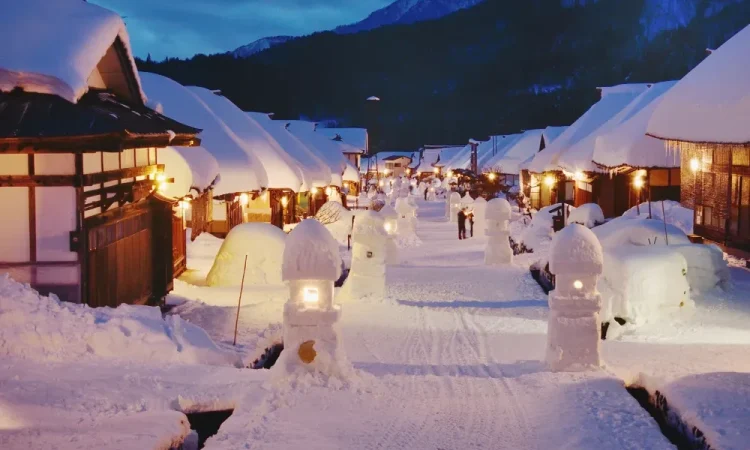
Japan is often celebrated for its cherry blossoms and autumn leaves, but winter has a magic all its own. Snow-covered temples, glowing light displays, steaming bowls of hot pot, and lively festivals make the colder months a rewarding time to visit. For travelers who do not mind bundling up, winter offers a quieter, cozier side of the country.
Seasonal travel is deeply woven into Japanese culture, and winter is no exception. Travelers planning a future Japan cruise or land trip may find that learning about winter traditions adds a new appreciation for how the country celebrates every season. Here is what makes winter in Japan special.
Sapporo Snow Festival
Held each February in Sapporo on the northern island of Hokkaido, the Sapporo Snow Festival is one of Japan’s best-known winter events. Massive snow and ice sculptures, some as large as buildings, line the city’s central park and other venues. The sculptures are illuminated at night, creating a dazzling atmosphere.
Other Winter Festivals Worth Knowing
- Otaru Snow Light Path: Lanterns and candles light the canals and streets of this Hokkaido town.
- Shirakawa-go light-ups: The thatched-roof farmhouses of this mountain village are illuminated on select winter evenings.
- Kamakura festivals: In some snowy regions, communities build small snow huts called kamakura.
Winter Illuminations
Across Japan, cities and gardens host elaborate light displays known as illuminations, often from late autumn through winter. Tree-lined avenues, parks, and theme parks glow with thousands of lights. These displays are especially popular in the evenings around the holiday season.
New Year Traditions
New Year, or shogatsu, is the most important holiday of the year in Japan. Many people visit shrines and temples for hatsumode, the first visit of the year, to pray for good fortune.
- Osechi ryori: Beautifully arranged New Year foods, each with symbolic meaning.
- Toshikoshi soba: Noodles eaten on New Year’s Eve to symbolize long life.
- Mochi: Rice cakes enjoyed in soups and sweets during the holiday.
- Temple bells: Many temples ring their bells at midnight to welcome the new year.
Seasonal Foods to Warm Up With
- Nabe: Hot pot dishes cooked at the table with vegetables, tofu, and meat or seafood.
- Oden: Simmered ingredients in a light broth, sold at street stalls and convenience stores.
- Winter seafood: Crab and other seafood are especially prized in colder regions.
- Roasted sweet potatoes: A classic winter street snack.
- Mikan: Small citrus fruits often enjoyed at home in winter.
Winter Customs at Home
The kotatsu, a low table with a heater underneath and a blanket draped around it, is a beloved winter fixture in many homes. On the winter solstice, some people take a yuzu bath, adding the fragrant citrus fruit to their bathwater for good health.
Hot Springs in the Snow
Soaking in an outdoor hot spring bath while snow falls around you is one of the most memorable winter experiences in Japan. Many onsen towns are especially atmospheric in the colder months.
Planning a Winter Visit
Winter weather varies widely across Japan, from heavy snow in the north and mountains to milder conditions in the south. Official resources from Japan’s tourism board share festival dates, travel tips, and regional weather guidance. Booking early for major festivals is wise, as accommodations fill quickly.
Common Mistakes to Avoid
- Underdressing: Northern Japan can be very cold and snowy.
- Forgetting traction: Icy sidewalks call for shoes with good grip.
- Overlooking New Year closures: Some businesses close for several days.
A Warmer Welcome in the Cold Season
Winter in Japan blends sparkling festivals, glowing lights, and comforting food into a season full of charm. For travelers willing to embrace the cold, it offers a memorable and often quieter way to experience the country’s rich traditions.


